
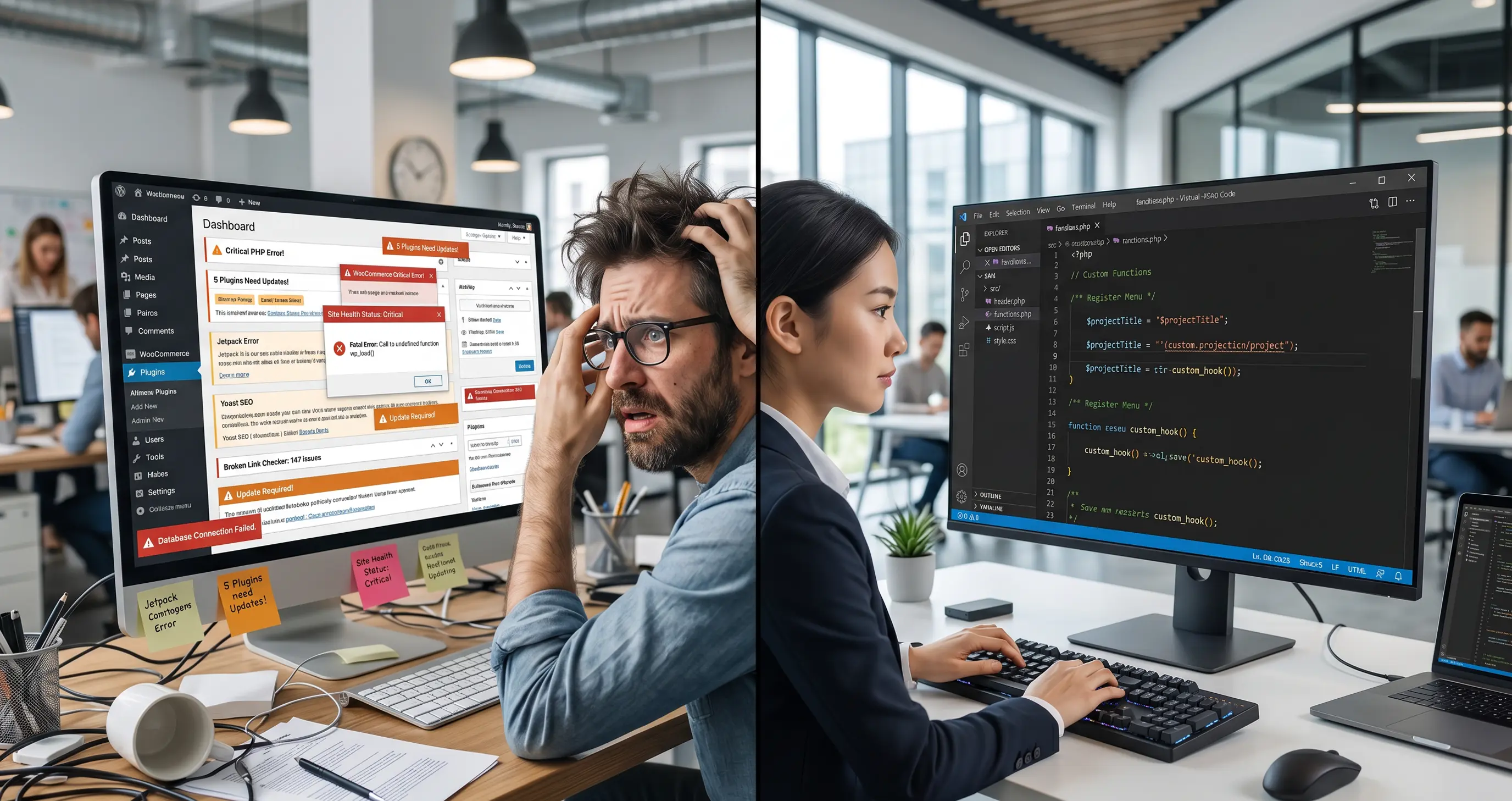
WordPress powers a large percentage of websites on the internet today. It’s widely used, easy to install, and often marketed as the default solution for building a website.
But popularity doesn’t always equal quality.
For businesses that rely on their website for lead generation, performance, and long-term growth, WordPress can introduce significant limitations—particularly in areas like security, speed, and scalability.
This is why many established companies are shifting toward fully custom web design solutions built from the ground up.
1. Security Risks and Constant Vulnerabilities
One of the biggest concerns with WordPress is security.
Because it is open-source and widely used, it is also one of the most targeted platforms for hackers. The core system, along with thousands of third-party plugins and themes, creates a large attack surface.
Many vulnerabilities don’t come from WordPress itself, but from outdated plugins, poorly coded themes, or abandoned extensions.
The Reality:
- Plugins require constant updates
- New vulnerabilities are discovered regularly
- Neglected sites become easy targets
With Custom Code:
A custom-built website only includes the functionality it actually needs—nothing more. This drastically reduces exposure to security risks and eliminates dependency on third-party plugins.
2. Plugin Bloat and Performance Issues
WordPress sites often rely on multiple plugins to achieve basic functionality.
Over time, this creates:
- Slower load times
- Conflicts between plugins
- Unnecessary code being loaded on every page
Even well-built WordPress sites can become bloated as features are added.
This directly impacts user experience and search engine rankings. If you’re concerned about performance, it’s worth understanding how website speed affects SEO and conversions.
With Custom Code:
Everything is built specifically for your site. No excess features, no unnecessary scripts—just clean, efficient code designed for speed.
3. Ongoing Maintenance Requirements
WordPress is not a “set it and forget it” platform.
To keep a WordPress site secure and functional, you need to:
- Update plugins regularly
- Update themes
- Update the core system
- Monitor for compatibility issues
Failing to do this consistently can lead to broken functionality—or worse, security breaches.
With Custom Code:
There are no plugins or third-party dependencies to constantly maintain. Updates are controlled, intentional, and far less frequent.
4. Limited Flexibility and Scalability
WordPress is built as a general-purpose platform. While it can be customized, it often requires workarounds to achieve more advanced functionality.
This becomes a problem as your business grows or your needs become more complex.
With Custom Code:
Your website is built specifically for your business. It can scale, evolve, and integrate with other systems without being constrained by a platform’s limitations.
5. Generic Design vs. True Customization
Many WordPress websites rely on pre-built themes.
Even when customized, these themes often retain structural limitations that make sites feel similar to countless others online.
This can impact branding and differentiation—especially in competitive markets.
With Custom Code:
Your design is created from scratch. Every element is tailored to your brand, your audience, and your goals. If you’ve ever wondered why many business websites fail, lack of differentiation is a major reason.
6. SEO Limitations
While WordPress offers SEO plugins, it often relies on them to handle critical optimization tasks.
This adds another layer of dependency and complexity.
With Custom Code:
SEO can be built directly into the foundation of the website—from clean code structure to optimized performance and metadata—without relying on plugins.
7. Long-Term Cost Considerations
At first glance, WordPress may seem more affordable.
However, over time, costs can add up through:
- Premium plugins
- Ongoing maintenance
- Security fixes
- Performance optimization
For many businesses, investing upfront in a custom solution can lead to better long-term value. If you're evaluating costs, you may also want to review website pricing in Miami to understand the bigger picture.
Why Custom Web Design Still Matters
In today’s market, it’s increasingly difficult to find companies that truly build websites from scratch.
Many agencies rely heavily on WordPress because it’s faster to deploy and easier to standardize.
But for businesses that prioritize performance, security, and long-term growth, custom development remains the superior option.
A custom website is not just a design choice—it’s a strategic investment in your business’s digital foundation.
Final Thoughts
WordPress has its place. For simple websites or short-term projects, it can be a viable option.
However, for businesses that depend on their website as a core driver of leads and revenue, the limitations and risks often outweigh the convenience.
If you’re looking for a more secure, scalable, and performance-driven solution, consider investing in custom web design built specifically for your business.
To explore your options, request a quote or learn more about how a custom-built website can support your long-term growth.